

Hassle-Free Renovation: Your Complete Homeowner Guide

TL;DR:
- A hassle-free renovation is a turnkey project managed by one firm from start to finish, reducing homeowner stress. It follows a strict work sequence, includes a contingency fund, and emphasizes clear communication to keep the project on track. Proper planning and choosing a contractor with a defined process lead to faster, less stressful home improvements.
Hassle-free renovation is defined as a turnkey project model where one professional or firm manages every phase of your home improvement project from planning through final cleanup. The industry term for this approach is “turnkey renovation,” and it covers design, trade coordination, procurement, scheduling, and inspections under a single point of accountability. This model reduces the three biggest sources of homeowner stress: budget surprises, scheduling conflicts, and decision overload. Whether you are remodeling a bathroom in Houston or updating a kitchen in Dallas, understanding how the turnkey model works gives you a clear path to a smooth remodeling experience with far fewer disruptions.
What is hassle-free renovation and how does the turnkey model work?
A hassle-free renovation is built on one core principle: you should never have to coordinate between your electrician, plumber, and tile installer yourself. In a turnkey renovation model, a single firm or project manager handles every trade, every schedule, and every purchase on your behalf. Professional turnkey designers manage everything from design and procurement to construction and final styling, giving you one person to call when questions arise.

The practical difference is significant. When you hire trades separately, you spend hours on the phone resolving conflicts between a plumber who ran late and a drywaller who showed up on time. A turnkey manager prevents that conflict before it starts by building a coordinated schedule from day one.
Here is what a full turnkey renovation typically includes:
- Single point of contact: One project manager answers every question and owns every outcome.
- Design and planning: Layouts, material selections, and permit applications are handled before work begins.
- Trade coordination: Electricians, plumbers, HVAC technicians, and painters are scheduled in the correct sequence.
- Procurement: Materials are sourced and ordered in bulk, often at lower cost and with fewer delays.
- Inspections and closeout: The firm schedules all required inspections and manages the punch list to completion.
Hiring a single firm for multi-trade projects eliminates blame shifting between vendors and reduces the management burden on you entirely. That benefit alone is why busy homeowners and first-time renovators consistently choose this model over managing trades independently.
Pro Tip: Ask any prospective contractor or firm directly: “Will you manage all trades, or will I need to coordinate some myself?” The answer tells you immediately whether you are hiring a true turnkey partner or a single-trade specialist.
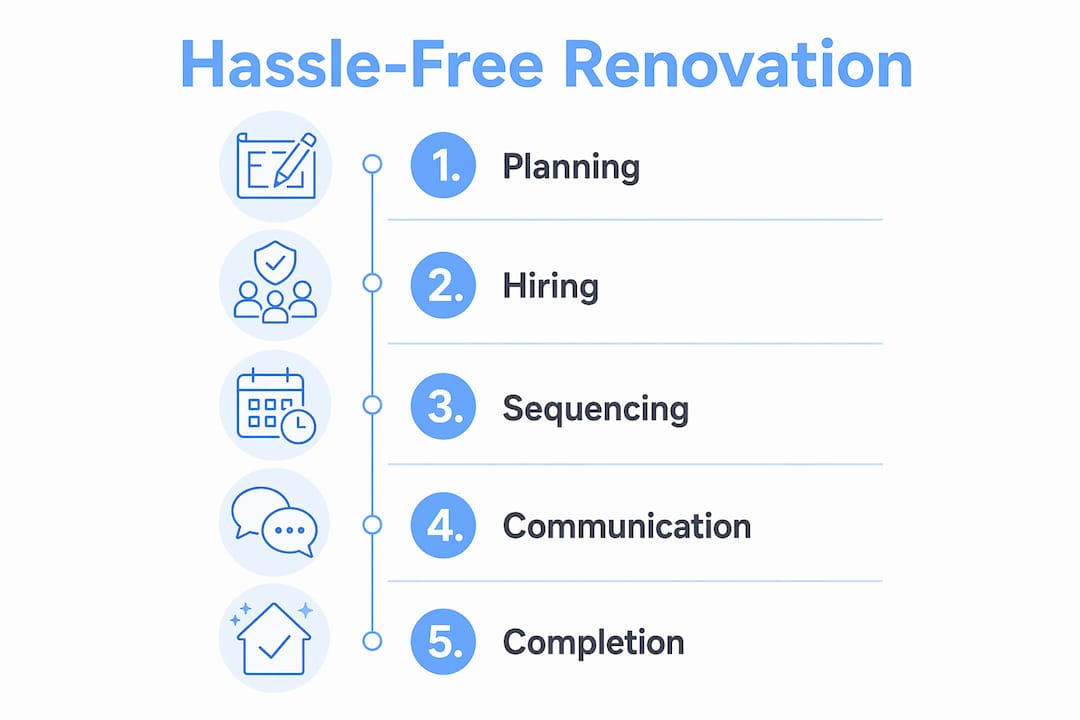
Turnkey renovation suits three types of homeowners especially well: those with demanding work schedules who cannot monitor a job site daily, first-time renovators who do not yet know the correct sequence of trades, and homeowners tackling complex projects involving multiple rooms or structural changes.
Why does work sequencing matter for a stress-free renovation?
The order in which renovation work happens is not flexible. Skipping steps or reversing the sequence causes expensive rework and delays that no amount of goodwill can fix after the fact.
The standard renovation sequence follows this order:
- Site preparation and demolition: Remove existing fixtures, walls, or flooring before any new work begins.
- Structural changes: Modify load-bearing walls, beams, or foundations while the space is open.
- Rough-in trades: Run electrical wiring, plumbing pipes, and HVAC ducts before walls are closed.
- Inspections: Pass all required municipal inspections before covering rough-in work with insulation or drywall.
- Insulation and drywall: Close the walls only after inspections are approved.
- Finishes: Install flooring, cabinetry, tile, paint, and fixtures last.
Following this defined sequence significantly reduces costly rework and budget overruns. Change orders, which are the main cause of overspending, almost always trace back to work done out of order or decisions made too late.
Budget management is equally tied to sequencing. The table below shows the most common sequence mistakes and their financial impact:
| Sequence mistake | What goes wrong | Typical cost impact |
|---|---|---|
| Finishing before rough-in inspection | Walls must be reopened for inspector access | High: labor and material rework |
| Installing flooring before plumbing | Flooring damaged during pipe work | Medium: replacement cost |
| Ordering cabinets before final measurements | Cabinets do not fit; returns and reorders required | Medium to high: delays and restocking fees |
| Painting before drywall repairs are complete | Touch-ups visible; full repaint often needed | Low to medium: labor cost |
A contingency fund of 15–30% of your total renovation budget is the standard recommendation for 2026 to cover hidden costs such as permits, inspections, and unforeseen repairs. That range exists because older homes routinely reveal surprises behind walls, including outdated wiring, water damage, or undersized pipes. Setting this money aside before demolition begins protects you from having to stop a project mid-construction.
Pro Tip: Build your contingency fund into your original budget before you share a number with any contractor. If you tell a contractor your total budget is $50,000, they will spend $50,000. Keep the contingency separate and private.
Clear upfront decisions also reduce change orders directly. Every time you change a material, a layout, or a fixture after demolition has started, you pay for the contractor’s time to stop, revise, and restart. Grouping all finish selections before work begins is the single most effective way to keep costs on track. A home renovation checklist helps you capture every decision before the first wall comes down.
How does communication keep your renovation on track?
Stress-free home improvement does not mean you hand over your keys and disappear for three months. The most common misconception about hassle-free renovation is that it means being completely hands-off. Effective renovation means being protected, not insulated. You stay informed without managing daily tasks.
The distinction matters because homeowners who disengage entirely often feel blindsided when problems arise. Homeowners who micromanage daily work create friction with their contractor and exhaust themselves. The right balance sits between those two extremes.
“Stress-free renovation does not mean the absence of problems. It means intentional management of issues through clear communication and anticipation, so homeowners feel protected rather than caught off guard.”
Decision fatigue is a major source of renovation stress that most homeowners do not anticipate. When a contractor calls you at 2:00 PM on a Tuesday to choose between two grout colors, then calls again Thursday about cabinet hardware, and again Friday about light fixture placement, the cumulative mental load becomes exhausting. Batching decisions together prevents this pattern entirely.
Practical communication strategies that work:
- Schedule weekly check-ins: A 15-minute call or site visit once a week keeps you informed without pulling you into daily operations.
- Batch material decisions: Group all tile, grout, hardware, and paint choices into one or two dedicated selection sessions before work begins.
- Establish a single communication channel: Use one method, whether text, email, or a project app, so nothing gets lost across multiple platforms.
- Set expectations for surprises: Ask your contractor upfront how they will notify you when unexpected issues arise and what their decision timeline looks like.
- Document everything in writing: Verbal agreements during a site visit are forgotten. Written confirmations protect both parties.
Organizing renovation choices into grouped decisions allows you to maintain mental clarity throughout the project. A home project app centralizes communication, tracks progress, and stores documents in one place, which removes a significant source of daily friction.
Practical tips for a hassle-free home renovation
Applying the right habits before and during your renovation separates a calm project from a chaotic one. These tips address the most common points where homeowners lose control of their budget, timeline, or peace of mind.
-
Freeze your design before demolition begins. Changing design decisions mid-construction triggers change orders that cost time and money. Finalize every material, layout, and fixture choice before the first wall comes down.
-
Set realistic timeline expectations. Turnkey projects typically finish in about 3 months, compared to 6–8 months for piecemeal managed projects. Even so, build buffer time into your personal schedule for inspections and material lead times.
-
Hold final payment until the project is complete. Never release the final payment before your punch list is finished, all inspections are passed, and lien waivers are signed. This financial control is your most powerful tool for ensuring quality completion.
-
Hire professionals with turnkey experience. A contractor who specializes in single-trade work is not the same as a firm experienced in full-service project management. Ask for references from multi-trade projects specifically.
-
Prepare your household for disruption. Noise, dust, and temporary loss of rooms are unavoidable during construction. Plan where family members will eat, sleep, and work during the most disruptive phases.
-
Use a project management tool. Digital tools that track tasks, store documents, and log contractor communications reduce the mental load of keeping everything organized. Bidwolf’s mobile app lets you manage project updates and contractor communication from your phone.
Pro Tip: Before signing any contract, ask the contractor to walk you through their standard communication process. A contractor who cannot describe their update schedule clearly will not communicate well during the project either.
Budgeting for hidden renovation costs such as permit fees, disposal costs, and inspection charges prevents the most common financial surprises. These costs rarely appear in initial quotes but consistently show up during execution.
Key Takeaways
A hassle-free renovation requires a turnkey project model, clear upfront decisions, and consistent communication to reduce stress, control costs, and keep timelines on track.
| Point | Details |
|---|---|
| Turnkey model reduces stress | One firm manages all trades, schedules, and procurement so you never coordinate between contractors. |
| Work sequence prevents rework | Following the correct order from demolition through finishes avoids costly mid-project corrections. |
| Budget with a contingency fund | Set aside 15–30% of your total budget for permits, inspections, and unforeseen repairs. |
| Freeze design before demolition | Finalizing all material and layout choices before work begins eliminates expensive change orders. |
| Hold final payment strategically | Release the last payment only after punch lists, inspections, and lien waivers are complete. |
What I have learned about truly hassle-free renovations
Most homeowners come into a renovation believing that hiring good contractors is enough. After watching hundreds of projects play out, I can tell you the contractor quality matters far less than the planning quality. The projects that go sideways almost always share one trait: decisions were made reactively instead of proactively.
The design freeze principle changed how I think about renovation entirely. Homeowners who finalize every finish, every fixture, and every layout before demolition starts experience a fundamentally different project than those who “figure it out as they go.” The second group spends more money, waits longer, and ends the project exhausted. The first group is usually surprised by how calm the process feels.
Proper work sequencing has the same effect. I have seen projects save weeks of time simply because a project manager scheduled the rough-in inspection before the drywaller arrived, rather than after. That one scheduling decision prevented a wall from being torn open twice. The financial savings were real, but the stress savings were larger.
The advice I give every homeowner before they start: find a contractor or firm that can describe their communication process in specific terms. “We will keep you updated” is not a process. “We send a written progress summary every Friday and call you within two hours of any unexpected issue” is a process. That specificity tells you everything about how the project will feel to live through.
Start the conversation early. The tone you set in the first meeting with your contractor determines the tone of the entire project.
— Devin
How Bidwolf connects you with the right renovation contractors
Finding a qualified contractor who handles full-service renovation projects used to mean weeks of phone calls, referrals, and guesswork. Bidwolf removes that friction entirely.

Bidwolf is an online platform where you post your renovation project and receive competitive bids from vetted, verified local contractors across Texas. You compare bids, review credentials, and communicate directly with contractors through built-in messaging, all in one place. The platform prioritizes contractors with verified licenses and a track record in multi-trade and turnkey renovation projects. Whether you are planning a bathroom remodel, a kitchen update, or a full home renovation, Bidwolf gives you a faster, more reliable way to find the right professional for a genuinely stress-free home improvement project.
FAQ
What is the difference between turnkey and standard renovation?
A turnkey renovation places one firm in charge of all trades, scheduling, and procurement from start to finish. A standard renovation requires the homeowner to hire and coordinate each contractor separately.
How long does a hassle-free renovation typically take?
Turnkey renovation projects typically finish in about 3 months, compared to 6–8 months for projects where the homeowner manages trades independently.
How much contingency budget should I set aside for a renovation?
A contingency fund of 15–30% of your total renovation budget is the standard recommendation to cover permits, inspections, and unforeseen repairs discovered during construction.
When should I finalize my design decisions?
Finalize all material selections, layouts, and fixture choices before demolition begins. Changes made after construction starts trigger change orders that increase both cost and project duration.
How do I protect myself financially during a renovation?
Never release the final payment until your punch list is complete, all inspections are passed, and lien waivers are signed. This financial control gives you the strongest leverage to ensure quality and full project completion.