
How Texas homeowners get the best landscaping bids
TL;DR:
- Landscaping bids in Texas vary greatly because they reflect differences in scope, materials, and contractor practices, not dishonesty.
- A professional bid includes detailed scope, specifications, itemized pricing, and clear warranties, helping homeowners make informed choices and negotiate confidently.
You receive three bids for your backyard project. One comes in at $4,200, one at $7,800, and one at $11,500. Same job, same yard, same city. That kind of gap is disorienting, and it happens to Texas homeowners every day. The difference usually has nothing to do with dishonesty. It has everything to do with what’s actually inside each bid. This guide walks you through exactly how landscaping bidding works, what every strong bid must include, how contractors arrive at their numbers, and how you can compare bids confidently to get real value for your money.
Table of Contents
- What is landscaping bidding?
- What’s included in a professional landscaping bid?
- How are landscaping bids calculated in Texas?
- Tips for comparing and choosing landscaping bids in Texas
- Why transparent bidding benefits Texas homeowners and what most miss
- Find trusted local landscapers with confidence
- Frequently asked questions
Key Takeaways
| Point | Details |
|---|---|
| Bids are more than price | Professional landscaping bids should include detailed project info, scope, costs, and terms—not just a bottom-line number. |
| Texas costs vary | Factors like labor rates, materials, and market competition make Texas landscaping bids unique from other markets. |
| Transparency protects you | Insist on itemized, transparent bids to avoid hidden costs and ensure you get the best value. |
| Smart comparisons win | Use side-by-side comparison and trusted platforms to evaluate bids, not just pick the lowest offer. |
What is landscaping bidding?
Landscaping bidding is the formal process where contractors review your project, calculate their costs, and submit a written proposal outlining what they’ll do, when they’ll do it, and what it will cost you. It’s the starting point for any professional landscaping relationship, and it sets the tone for everything that follows.
A bid is not just a number scribbled on a piece of paper. Think of it as a mini-contract proposal. When you receive one, you’re looking at a document that should communicate the contractor’s understanding of your project and their plan to deliver results. According to a professional landscaping estimate breakdown, a strong bid goes well beyond price and includes client and project information, a detailed scope of work, material specs, labor and time estimates, itemized pricing, payment terms, warranties, and clear exclusions.
In Texas, the contractor market is large and competitive. Cities like Austin, Dallas, Houston, San Antonio, and Fort Worth each have dozens of licensed landscaping companies competing for the same jobs. That competitive pressure is actually good news for you. It means more options, more transparency, and more negotiating power, but only if you know how to read what you’re receiving.
Here’s what a complete bid covers at a high level:
- Scope of work: What exactly will be done, plant by plant or zone by zone
- Material specifications: Brand names, grades, and quantities of all materials
- Labor and timeline: How many workers, how many hours or days
- Itemized pricing: Line-by-line cost breakdown, not a lump sum
- Payment schedule: Deposit, milestones, and final payment terms
- Warranties and guarantees: What happens if plants die or work fails
- Exclusions: What the bid specifically does NOT cover
Learning to use a good contractor marketplaces guide can help you understand how the bidding process works on digital platforms, where multiple contractors submit competing proposals for your review.
A bid is your first real look at how a contractor thinks and operates. A thorough, organized bid signals professionalism. A vague, one-line quote signals risk.
Pro Tip: Never choose solely on price. A low number with no scope of work attached can cost you far more when unexpected charges appear mid-project. Look for bids that are complete, clear, and show the contractor truly understood your job.
What’s included in a professional landscaping bid?
With a foundation in what bidding means, let’s explore the details every strong landscaping bid should contain.
Many homeowners expect a one-page quote. Professional contractors deliver something closer to a structured proposal. Each section of that proposal serves a specific purpose, and missing sections often signal that a contractor cut corners during their assessment of your project.
A well-structured bid typically includes client and project information, a detailed scope of work, materials and equipment lists, labor and time breakdowns, itemized pricing, payment terms, warranties, and explicit exclusions. Let’s break down why each piece matters specifically for Texas homeowners.
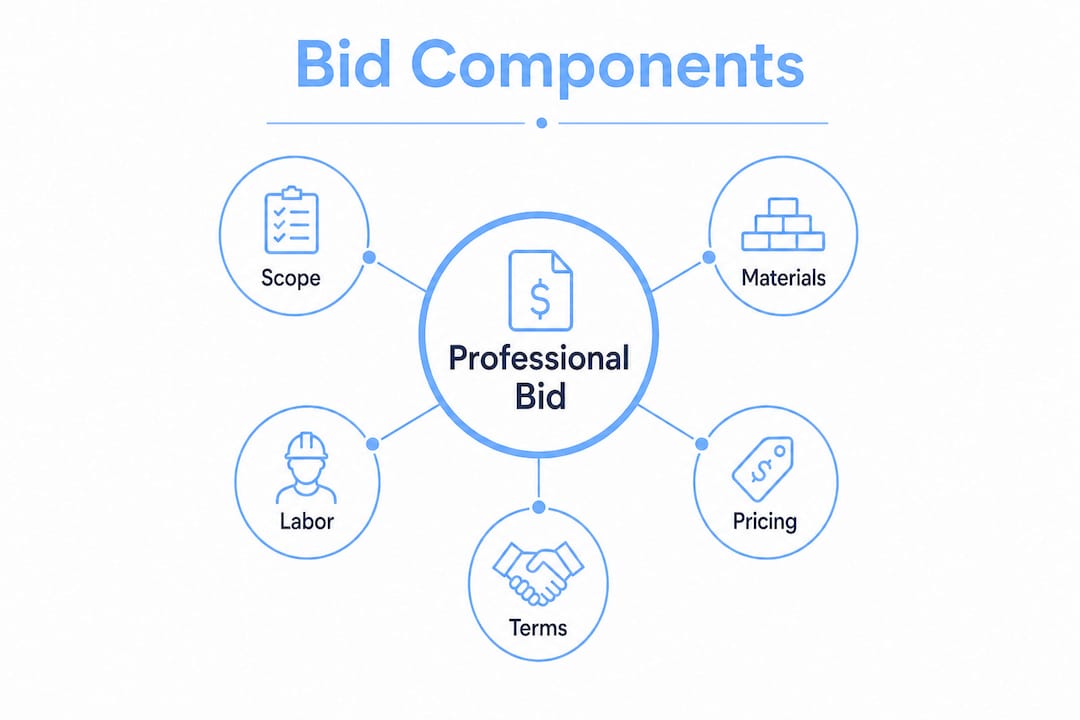
Project and client information confirms the contractor visited your actual property and is pricing your specific job. It should include your address, the date, and a brief project description.
Scope of work is the most important section. It tells you exactly what will be done. For a Texas lawn renovation, this might include turf removal, grading, irrigation installation, sod laying, mulching, and ornamental planting. Each task should be listed separately so you can evaluate whether it matches your expectations.
Material specifications are especially relevant in Texas, where native plants like Texas sage, live oak, and buffalo grass perform very differently from imported species. A strong bid names the exact plants, materials, and products being used. Vague language like “assorted shrubs” is a red flag.
Labor and time estimates show you how the contractor values their crew’s work. Labor typically makes up a significant portion of your total cost, and it should be visible, not hidden inside a lump sum.
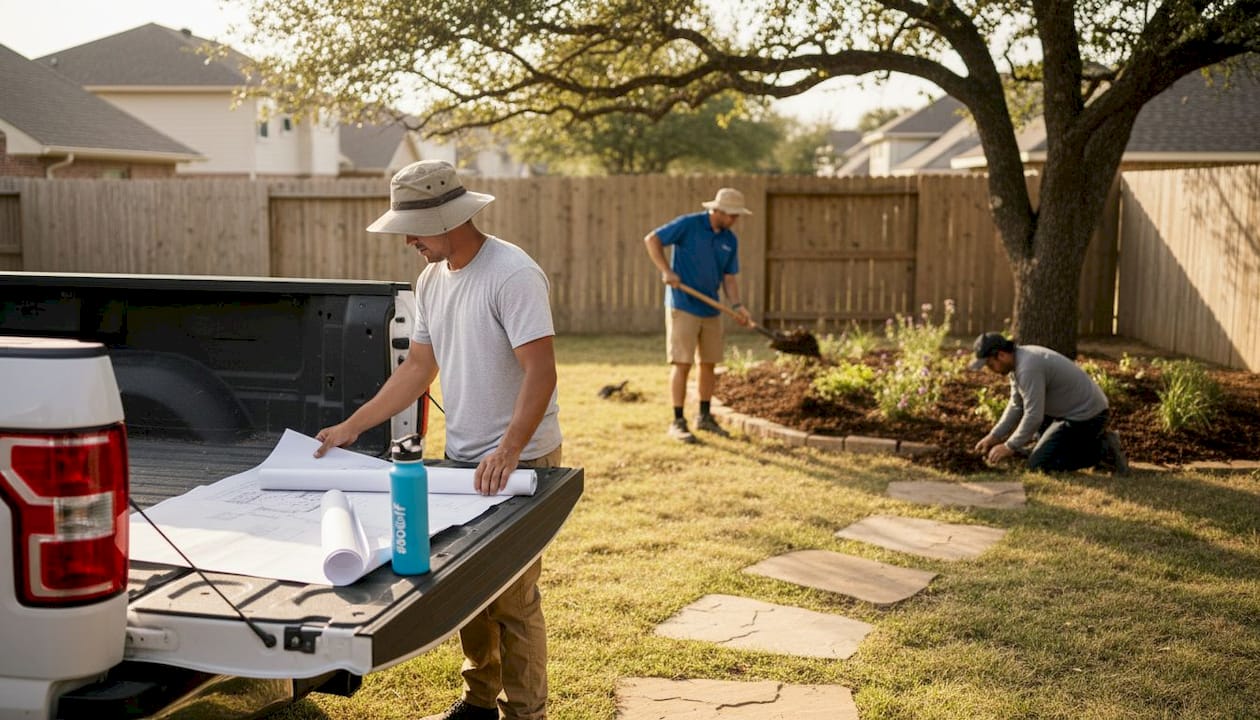
Itemized pricing is where the bid earns its credibility. You should be able to see what you’re paying for each line item. This protects you from inflated totals and allows for fair comparisons across multiple bids.
Payment terms in Texas landscaping jobs often follow a standard structure: a deposit upfront (commonly 25% to 33%), progress payments tied to project milestones, and a final payment on completion.
Warranties and exclusions round out the document. A warranty tells you what the contractor stands behind. Exclusions tell you what’s not covered, which is just as important.
Here’s a quick comparison to help you spot the difference between a professional bid and an incomplete one:
| Bid element | Professional bid | Incomplete bid |
|---|---|---|
| Scope of work | Detailed, task-by-task | Vague or missing |
| Material specs | Named, quantified | Generic descriptions |
| Labor breakdown | Hours and crew size listed | Rolled into lump sum |
| Itemized pricing | Line by line | Single total only |
| Payment terms | Clear milestones | Not specified |
| Warranties | Defined duration and coverage | Absent or unclear |
| Exclusions | Explicitly listed | Not mentioned |
Reviewing winning contractor bid examples can sharpen your eye for what strong proposals look like in practice. Once you’ve seen a well-built bid, incomplete ones become obvious quickly.
How are landscaping bids calculated in Texas?
Knowing the bid’s structure leads to the next common question: how are those numbers determined, especially here in Texas?
Contractors don’t arrive at a bid number by guessing. There’s a structured calculation behind every professional estimate, and understanding that structure gives you real leverage when reviewing proposals.
Texas landscaping pricing depends heavily on labor, plus material and supply costs, equipment and fuel, overhead, profit margin targets, and local market conditions across different metro areas. Let’s unpack each of these.
Labor is the biggest driver. For most Texas landscaping jobs, labor accounts for 50% or more of the total bid. This includes the crew doing the physical work, the foreman managing the site, and any specialized technicians like irrigation installers. Skilled labor in Texas metro markets has grown more expensive in recent years, particularly in Austin and Dallas, where demand for experienced crews is consistently high.
Materials make up another major chunk. Plants, mulch, soil amendments, irrigation components, stone, pavers, and other hard materials all carry their own price tags. Texas heat places additional pressure on plant selection, so professional contractors often specify drought-tolerant or heat-adapted species that cost more upfront but perform better long term.
Equipment and fuel cover excavators, skid steers, aerators, and the trucks needed to haul materials. For larger jobs involving grading or significant hardscape, equipment costs can be substantial.
Overhead accounts for the contractor’s business expenses. Insurance, licensing, office costs, and vehicle maintenance all factor into how a contractor prices their services.
Profit margin is a legitimate and expected part of any bid. Texas landscaping contractors typically target profit margins of 15% to 30% depending on job size and complexity. A larger, more complex project may carry a lower percentage margin but still deliver more total profit to the business.
Here’s a realistic example of how cost composition might break down for a mid-size Texas landscaping project:
| Cost category | Percentage of total bid |
|---|---|
| Labor | 50% to 55% |
| Materials and plants | 25% to 30% |
| Equipment and fuel | 5% to 8% |
| Overhead allocation | 5% to 7% |
| Profit margin | 15% to 20% |
Keep in mind that local market conditions vary across Texas. A bid in Houston, where the contractor market is dense, may be more competitive than one in a smaller market. Fort Worth bids may reflect different material availability and labor rates than bids in San Antonio. When comparing contractor bids, always factor in these regional differences rather than expecting a uniform price across the state.
The benefits of bidding platforms become especially clear when you realize that posting your project online can surface multiple competitive bids from contractors in your specific area, allowing you to see how local pricing actually shakes out.
Pro Tip: Ask every contractor to provide a detailed cost breakdown, not just a total. Any professional willing to do the work will have no problem showing you how they calculated the number. If a contractor resists sharing line-item details, that alone tells you something important.
Tips for comparing and choosing landscaping bids in Texas
Once you receive multiple bids, here’s how you can confidently compare and select the best fit for your project.
Evaluating bids is a skill, and like any skill, it gets easier with a clear process. Many Texas homeowners make the mistake of sorting bids from lowest to highest and calling it done. That approach leaves you exposed to cost overruns, delays, and substandard work.
Here’s a step-by-step checklist for comparing landscaping bids effectively:
-
Verify the scope matches your expectations. Read each bid’s scope of work carefully. If one contractor included irrigation and another didn’t, you’re not comparing equal proposals. Adjust your evaluation to account for what’s actually included.
-
Check for itemized pricing. Any bid that lists only a total should be sent back with a request for a line-item breakdown. You need to know where your money is going.
-
Review material specifications. Look for named products and quantities. “Six ornamental trees” is incomplete. “Six Vitex agnus-castus (Texas lilac), 15-gallon containers” gives you something concrete to evaluate and compare.
-
Assess payment terms. A contractor asking for 50% or more upfront on a standard residential project is a concern. Industry norms in Texas usually call for a smaller deposit with milestone-based payments.
-
Look at warranties and exclusions. A bid that includes a 90-day plant replacement warranty is meaningfully different from one that offers none. Exclusions tell you what you may need to budget for separately.
-
Research the contractor’s track record. Ask for references from completed Texas projects similar to yours. Photos of past work, especially in your region’s climate, are valuable evidence.
-
Evaluate communication quality. How quickly did the contractor respond? Did they ask good questions about your project? A contractor who communicates clearly during the bid process usually communicates clearly on the job site too.
A helpful Texas homeowner checklist can walk you through contractor evaluation steps specific to the Texas market, from licensing verification to payment protection.
Streamlining your project bidding is much easier when you use a platform that brings vetted contractors to you rather than requiring you to chase down individual quotes.
The Texas landscaping pricing landscape also means that red flags in bids are worth taking seriously. Watch for vague language like “labor as needed,” missing material lists, or pricing that seems unusually low with no explanation. Extremely low bids often signal that the contractor plans to substitute cheaper materials, cut crew size, or add charges through change orders once work begins.
Red flags to watch for in any bid:
- No itemized pricing: Just a single total with no breakdown
- Missing material names: Generic descriptions with no specifics
- Vague timelines: No start date, no completion estimate
- No payment schedule: Or a demand for full payment upfront
- Absent exclusions: No mention of what’s not included
- No warranty language: Especially on plant material in Texas heat
- Pressure to decide immediately: Legitimate contractors don’t rush you
Pro Tip: Use a reputable bidding platform to reach vetted professionals in your area. Platforms that verify contractor credentials before allowing them to bid give you a baseline level of trust that cold outreach simply can’t guarantee.
Why transparent bidding benefits Texas homeowners and what most miss
Here’s a perspective worth considering: most homeowners enter the landscaping bidding process focused almost entirely on the bottom-line number. They want to know who is cheapest. And that instinct is understandable, especially when a project budget is tight. But it is also the instinct most likely to cost you more in the end.
We’ve seen this pattern play out repeatedly. A homeowner in the Dallas area accepts a $4,500 bid over a $6,800 bid because the price is $2,300 lower. Six weeks later, the project is complete but the irrigation system wasn’t included, two of the planted trees died within 30 days with no warranty to fall back on, and there was an additional charge of $1,100 for “site preparation not covered in original scope.” The final cost ended up exceeding the more expensive bid, and the homeowner had no recourse because the exclusions were vague.
That situation is preventable. A detailed bid that clearly defines scope, materials, labor, exclusions, and warranties gives you the information you need to make a real decision. It also gives you leverage. When you can point to specific line items, you can negotiate. You can ask a contractor to use a different plant species to reduce material costs, or request a smaller deposit. Negotiation is only possible when there’s something concrete to negotiate about.
Texas’s contractor market rewards informed homeowners. Because pricing is driven by labor, materials, overhead, and competition, the same project can legitimately vary in cost from one contractor to another. But that variation should be explainable. A transparent contractor can tell you exactly why their number is what it is.
One thing most homeowners miss is the value of asking questions, even the ones that feel basic. Asking “what happens if a plant dies in the first summer?” or “is the irrigation system included in this number?” isn’t showing weakness. It’s showing that you’re an informed buyer. Contractors who answer those questions clearly and patiently are the ones who communicate the same way when a problem arises on the job.
Learning to communicate effectively with Texas contractors is one of the most practical skills you can develop as a homeowner. It changes how contractors approach your project and how much respect they bring to the work.
If a contractor is unwilling or unable to give you detailed terms upfront, that is a signal about how they will handle surprises mid-project. Transparent bidding isn’t just about fair pricing. It’s about establishing a working relationship built on clarity, accountability, and mutual respect.
Find trusted local landscapers with confidence
Ready to put your new knowledge into practice? Here’s a trusted way to get started.
BidWolf makes the process of finding, comparing, and hiring skilled Texas landscaping professionals straightforward. You post your project once, and local vetted contractors come to you with competitive bids. No cold calls, no guesswork about credentials, and no chasing down estimates one by one.
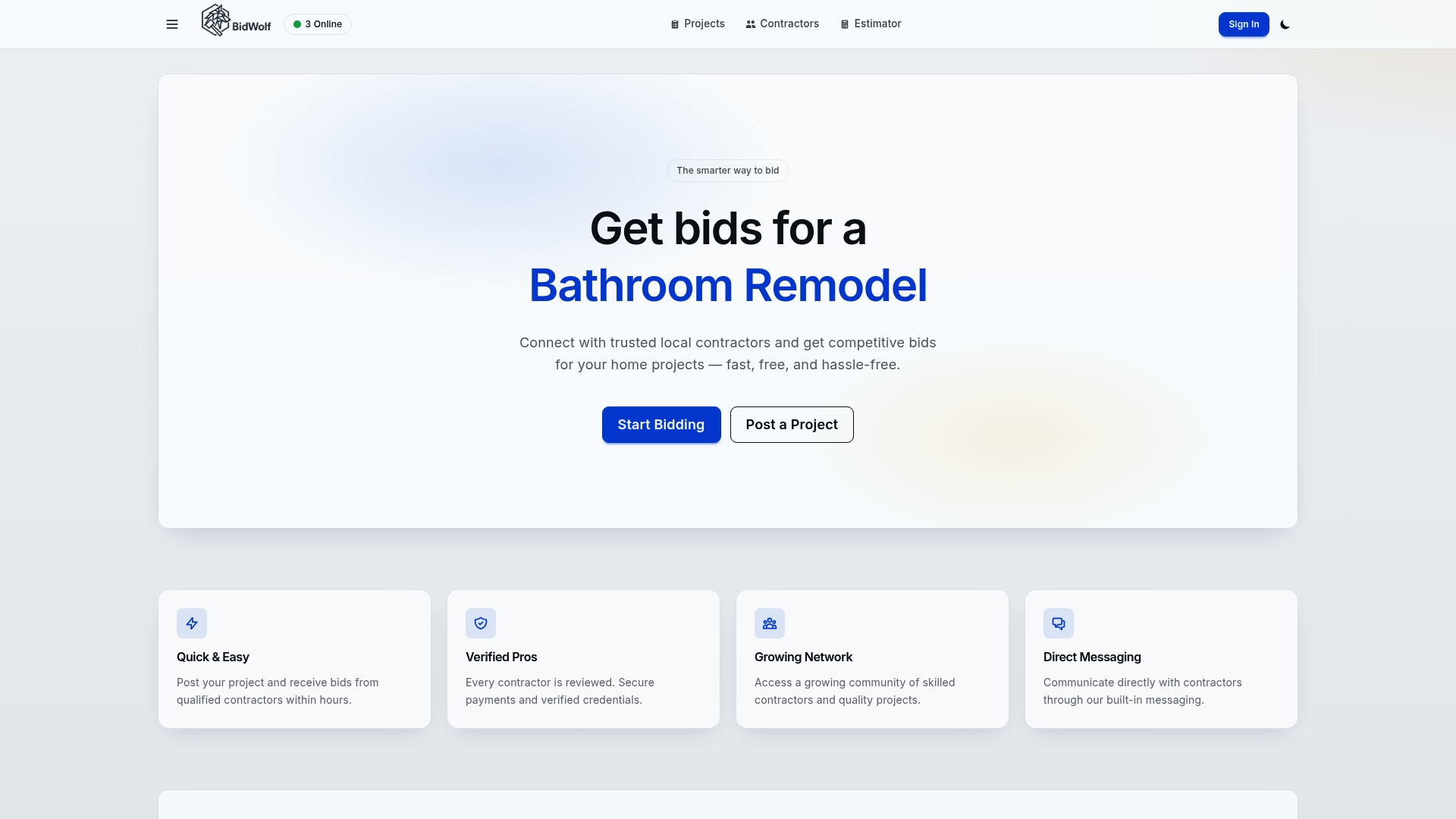
You can browse local landscaping projects to get a sense of what other Texas homeowners are working on, or go directly to find trusted contractors in your area. BidWolf’s platform includes built-in messaging so you can ask contractors questions before committing, secure payment handling, and verified credential checks on every professional in the network. Whether you’re planning a full backyard renovation or a focused planting project, the right bid is closer than you think.
Frequently asked questions
What details should I expect in a landscaping bid?
A professional landscaping bid should include project details, scope of work, materials, labor, pricing, payment terms, and any exclusions. According to bid/estimate standards, warranties and guarantees should also be clearly stated.
How are landscaping bids in Texas calculated?
Texas bids typically calculate labor as 50% or more of total costs, with materials, equipment, and a 15% to 30% profit margin layered in depending on project complexity and local market conditions.
What’s the difference between a bid and an estimate?
A bid is a firm, itemized offer that commits the contractor to specific pricing and scope, while an estimate is more flexible and may change as project details become clearer.
How can I spot a low-quality landscaping bid?
Watch for vague language, a single lump-sum total with no line items, missing material names, no payment schedule, and no warranty or exclusion language.
Should I always pick the lowest bid for my project?
Not necessarily. A low bid without complete scope, clear materials, and defined terms can lead to higher costs through change orders and substandard results. Consider detail, experience, and communication quality alongside price.
Recommended
- Texas homeowner’s checklist: smart tips for choosing contractors | BidWolf Blog
- How to compare contractor bids for home projects in Texas | BidWolf Blog
- Contractor marketing strategies that attract Texas homeowners | BidWolf Blog
- Top benefits of contractor bidding platforms for Texas homeowners | BidWolf Blog