

The Role of Digital Marketplaces in Contracting

TL;DR:
- Digital marketplaces replace manual bidding with automated, transparent workflows that significantly reduce project cycle times. They improve price transparency through standardized templates, verified credentials, and real-time market data, helping homeowners compare bids accurately. These platforms also ensure secure payments via escrow systems and offer legal safeguards, but users must vet contractors carefully due to high market churn and platform power concentration.
Digital marketplaces in contracting are platforms that connect homeowners and businesses directly with vetted contractors, replacing fragmented phone calls and paper bids with centralized, transparent workflows. The industry term for this model is “online procurement marketplace,” though most homeowners simply call it a bidding platform. The role of digital marketplaces in contracting has grown sharply: online marketplaces now account for nearly 50% of global online Gross Merchandise Value outside China, growing roughly 10% annually. That scale reflects how deeply these platforms have embedded themselves in how projects get sourced, priced, and awarded. For homeowners planning a bathroom remodel, a roofing replacement, or a landscaping overhaul, understanding how these platforms work is the fastest path to a fair price and a reliable contractor.
How do digital marketplaces reduce contracting cycle time?
Digital marketplaces reduce the RFQ-to-order cycle by automating the distribution of project requirements to multiple vetted contractors at once. That single change eliminates the back-and-forth that traditionally added days or weeks to a project start. Centralized dashboards give homeowners real-time bid tracking, so you see every incoming quote in one place rather than hunting through emails and voicemails. The result is fewer errors, faster decisions, and measurable time savings from the first post to the final contract award.
The process improvements follow a clear sequence:
- Post your project. You describe the scope, upload photos, and set a timeline. The platform syndicates that request to every qualified contractor in your area simultaneously.
- Receive bids automatically. Contractors submit structured quotes through the platform. No manual data entry on your end.
- Compare bids in real time. A centralized dashboard displays all quotes side by side, flagging differences in materials, labor, and timeline.
- Communicate directly. Built-in messaging lets you ask follow-up questions without sharing personal contact details prematurely.
- Award the contract. You select a contractor, sign a digital agreement, and fund the escrow account. Work begins on a defined schedule.
- Release payments by milestone. Funds move only when each phase of work is verified complete, protecting both parties throughout the project.
Pro Tip: Write your project description with specific measurements, materials, and a target completion date. Vague posts attract vague bids. Specific posts attract accurate ones.
In what ways do digital marketplaces enhance price transparency?

Price transparency is the single biggest advantage digital platforms deliver over traditional contractor sourcing. Standardized bidding templates and real-time market cost indexes transform negotiation from guesswork into data-driven comparison. When every contractor submits a quote using the same format, you can read across line items and spot exactly where prices differ.
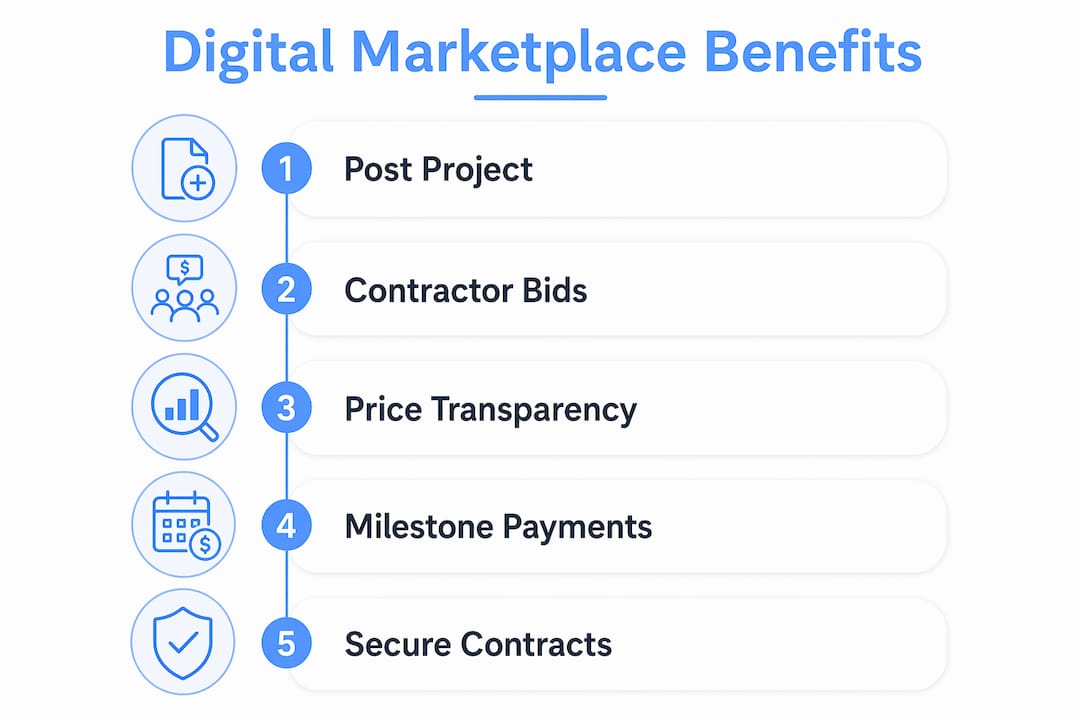
The mechanism behind this is the standardized Bill of Quantities, or BOQ. A standardized BOQ framework compels every contractor to itemize labor, materials, and overhead separately. Historically, contractors could obscure third-party markups inside a lump-sum figure. BOQ formatting makes that impossible. Clients avoid confusing or manipulated bids, and the savings from eliminating hidden fees can be significant on larger projects like full kitchen remodels or roof replacements.
Key transparency features to look for on any platform:
- Standardized quote templates. Every bid uses the same line-item structure, making direct cost comparison possible.
- Market cost indexes. Real-time data on regional labor and material rates gives you a benchmark before the first bid arrives.
- Verified contractor credentials. Contractor profiles include licenses, insurance, and trade specializations, so you know who is actually bidding.
- Platform-generated reviews. Ratings from past clients add a layer of accountability that a phone referral cannot replicate.
- No hidden intermediary fees. Reputable platforms disclose their fee structure upfront, so the price you see reflects actual contractor costs.
| Pricing method | Transparency level | Risk of hidden fees |
|---|---|---|
| Traditional lump-sum quote | Low | High |
| Itemized manual quote | Medium | Medium |
| Platform BOQ template | High | Low |
Pro Tip: Before accepting any bid, check whether the platform provides a regional cost index for your project type. If a bid falls more than 20% below the index average, ask the contractor to explain the gap in writing.
What security and legal safeguards do digital marketplaces provide?
Security in contracting comes down to two things: getting paid what you agreed to and having legal recourse when something goes wrong. Digital platforms address both through escrow payment systems and standardized contract templates. Escrow payment processing with milestone-based releases protects homeowners from paying upfront for work that never gets completed, and it protects contractors from clients who delay payment after work is done.
Here is how the legal layer works on well-built platforms:
- Escrow accounts. Funds are held in trust by the platform and released only when a defined milestone is verified complete. This prevents premature payment and incentivizes project completion.
- Standardized contract templates. Platforms provide Statements of Work (SOW) and, where relevant, intellectual property agreements. These templates set clear expectations and reduce the likelihood of disputes.
- Contractor classification compliance. Platforms must structure contracts carefully to maintain independent contractor status and avoid employer-like controls that could trigger misclassification liability. Homeowners benefit because properly classified contractors carry their own insurance and tax obligations.
- Dispute resolution processes. Many platforms now actively set trading rules and standardize contracts, changing the legal relationship between users and the platform itself. This active involvement means the platform can mediate disputes rather than leaving you to pursue legal action independently.
- Liability limitations. Platform terms of service define what the marketplace covers and what falls to the contractor. Reading these terms before posting a project saves significant confusion later.
Pro Tip: Never pay a contractor directly outside the platform’s payment system. Doing so voids escrow protections and eliminates your dispute resolution options. If a contractor requests off-platform payment, treat it as a red flag.
For homeowners in Texas, Bidwolf’s secure contractor hiring guide covers platform-specific payment and contract protections in detail.
What challenges are associated with contractor marketplaces?
Digital platforms lower the barrier for small contractors to find work, but that same accessibility creates a high-entry, high-churn market. Digital platforms lower barriers for small contractors but create a high-entry, high-churn dynamic, making reputation and vetting systems the most critical feature a platform can offer. A contractor who joined the platform last week has no track record. A contractor with 50 completed projects and consistent five-star reviews does. The difference matters enormously when you are trusting someone to rewire your home or replace your roof.
Platform concentration is a related concern. As marketplace business models represent nearly 90% of ecommerce revenue, the platforms that survive tend to accumulate significant power over pricing rules, contractor access, and dispute outcomes. Homeowners and contractors alike operate within rules set by the platform. Choosing a platform with transparent, fair policies protects you from arbitrary rule changes that could affect your project mid-stream.
“While platforms ease contractor access to jobs, they also concentrate market power, meaning users must be mindful of platform rules and reliability when choosing marketplaces. The platforms that invest in rigorous vetting, clear dispute resolution, and AI-driven fraud detection are the ones worth trusting with your project.”
Artificial intelligence is reshaping how platforms address these challenges. AI-driven matching tools analyze contractor specializations, past performance, and geographic availability to surface the most relevant bids for each project. Fraud detection algorithms flag suspicious bidding patterns before they reach homeowners. Dynamic pricing models help platforms keep cost indexes current with real market conditions. The evolving role of AI within marketplaces is pushing platforms to compete on match quality, not just contractor volume.
How can homeowners maximize value on digital marketplaces?
Getting the most from a digital marketplace requires deliberate preparation before you post and careful management after bids arrive. The platform provides the tools. You decide how well you use them.
- Write a detailed project brief. Include square footage, existing conditions, preferred materials, and a realistic timeline. Contractors who understand your project accurately will bid accurately. Vague briefs produce wide bid ranges that are hard to compare.
- Evaluate contractor profiles thoroughly. Contractor profiles include verified credentials such as licenses, insurance certificates, trade specializations, and platform-generated reviews. Cross-check license numbers with your state licensing board for high-value projects. Bidwolf’s guide on what defines a reliable contractor walks through each credential type in plain language.
- Use built-in messaging for all communication. Keeping conversations inside the platform creates a documented record. That record becomes your evidence if a dispute arises later.
- Set clear milestones before work begins. Define what “complete” means for each phase. Milestone definitions drive escrow releases, so ambiguity at this stage creates payment disputes later.
- Review contract terms line by line. Platform templates are standardized, but contractors sometimes request modifications. Any change to payment terms, liability clauses, or scope definitions deserves careful reading before you sign.
- Leverage the review system after project completion. Leaving an honest, detailed review helps the next homeowner make a better decision. It also holds contractors accountable to the quality standards that make the platform trustworthy.
Pro Tip: Request references from a contractor’s two most recent projects, not their best projects. Recent references reflect current workload, crew quality, and communication habits more accurately than a showcase job from three years ago.
Homeowners considering a flooring project can also benefit from understanding when professional installation outperforms DIY. A professional vs. DIY comparison for hardwood flooring illustrates exactly where the cost and quality tradeoffs land, which helps you write a more accurate project brief when posting on a marketplace.
Key Takeaways
Digital marketplaces in contracting deliver the most value when homeowners combine detailed project briefs, verified contractor credentials, and platform-enforced escrow payments to create a transparent, protected hiring process.
| Point | Details |
|---|---|
| Cycle time reduction | Automated RFQ syndication cuts days of manual outreach to minutes, with real-time bid tracking in one dashboard. |
| Price transparency | Standardized BOQ templates eliminate hidden fees and let you compare contractor costs line by line. |
| Payment security | Milestone-based escrow holds funds in trust and releases them only when each project phase is verified complete. |
| Contractor vetting | Verified licenses, insurance, and platform reviews distinguish credible contractors from unverified listings. |
| Platform selection | Choose platforms with clear dispute resolution policies and AI-driven vetting to offset high-churn contractor dynamics. |
My view on where digital contracting is actually headed
I have watched the contracting industry shift from handshake deals and paper bids to fully digital workflows over the past decade. The change that surprises most homeowners is not the technology. It is the power shift. A homeowner who posts a project on a well-built marketplace now holds more negotiating leverage than a general contractor did ten years ago. You see every bid, every credential, and every review before you commit a single dollar.
The features that matter most are not the flashy ones. Escrow payment systems and standardized contract templates are unglamorous, but they are the reason digital contracting works at all. Without them, a marketplace is just a job board. With them, it becomes a system that protects both parties and keeps projects moving.
The contractor churn problem is real and worth taking seriously. Platforms with low barriers to entry will always attract some contractors who are not ready for the work they bid on. The antidote is rigorous vetting, not platform avoidance. Look for platforms that verify licenses independently, require insurance documentation, and remove contractors with patterns of negative reviews.
AI matching is the development I am watching most closely. Current platforms match on geography and trade category. The next generation will match on project complexity, contractor capacity, and historical performance on similar jobs. That level of specificity will make the best platforms significantly more reliable than anything available today.
— Devin
Bidwolf connects you with vetted local contractors
Bidwolf is a digital marketplace built specifically for home improvement projects across Texas. You post your project, whether it is a bathroom remodel, roofing job, electrical upgrade, or landscaping overhaul, and receive competitive bids from license-verified local contractors.
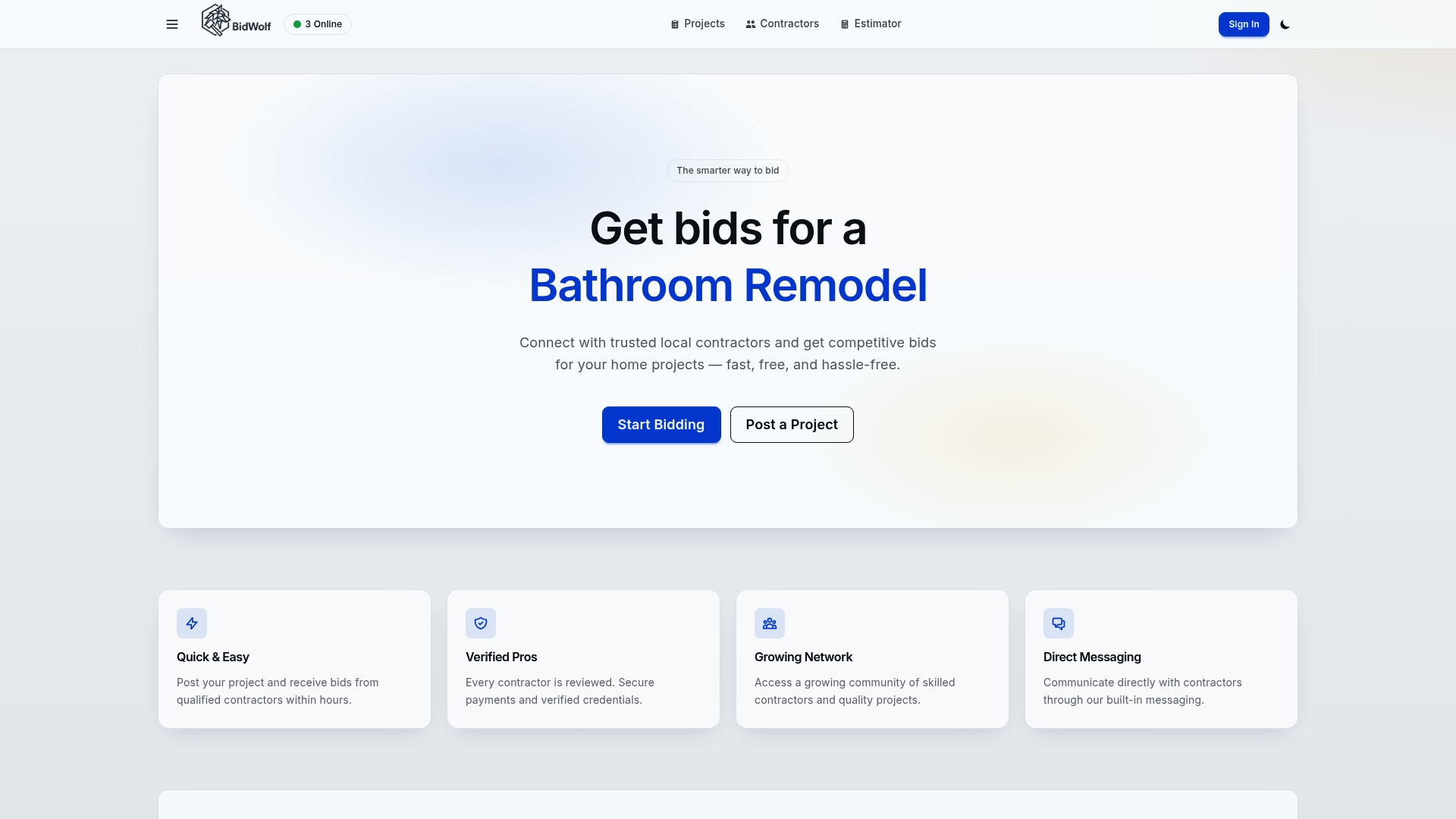
The platform includes built-in messaging, milestone-based escrow payments, and standardized contract templates, so every project starts with clear terms and protected funds. Bidwolf’s growing contractor network spans multiple Texas cities, and the mobile app lets you manage bids and communicate with contractors from anywhere. Post your project on Bidwolf to receive competitive bids from vetted professionals, or browse local contractors by trade and location to find the right fit before you post.
FAQ
What is the role of digital marketplaces in contracting?
Digital marketplaces in contracting connect homeowners and businesses with vetted contractors through centralized platforms that handle bidding, communication, payments, and contracts. They replace fragmented, manual sourcing with automated, transparent workflows that reduce cycle time and protect both parties.
How do escrow payments work on contractor platforms?
Escrow systems hold project funds in trust and release them in stages as each defined milestone is verified complete. This structure prevents premature payment and gives contractors confidence they will be paid for completed work.
What is a Bill of Quantities and why does it matter?
A Bill of Quantities (BOQ) is a standardized pricing template that requires contractors to itemize labor, materials, and overhead separately. Platforms that enforce BOQ formatting eliminate hidden fees and make direct cost comparison between bids possible.
How do I evaluate a contractor’s profile on a marketplace?
Check for verified licenses, current insurance certificates, trade specializations, and platform-generated reviews from recent projects. Cross-referencing license numbers with your state licensing board adds an extra layer of confidence on high-value jobs.
What risks should I watch for when using contractor marketplaces?
High contractor turnover on open platforms means vetting quality varies. Avoid any contractor who requests payment outside the platform’s escrow system, and choose platforms with clear dispute resolution policies before you post your first project.