

The Role of Technology in Home Renovations Today
TL;DR:
- Technology is transforming home renovations by making projects faster, more accurate, and less prone to budget overruns.
- Homeowners adopting AI and digital tools early can complete remodels on time, within budget, and with fewer regrets.
Technology defines the role of modern home renovations by making projects faster, more accurate, and far less likely to go over budget. AI adoption among homeowners jumped from 9% in 2025 to nearly 25% in 2026, with 84% of those users saying AI influenced their project decisions. That shift is not a trend. It is a structural change in how homeowners plan, budget, and execute remodels. From AI bid analysis to smart home infrastructure, digital tools now sit at the center of every well-run renovation. The homeowners who understand this early finish projects on time, within budget, and with fewer regrets.
What technologies are reshaping home renovations today?
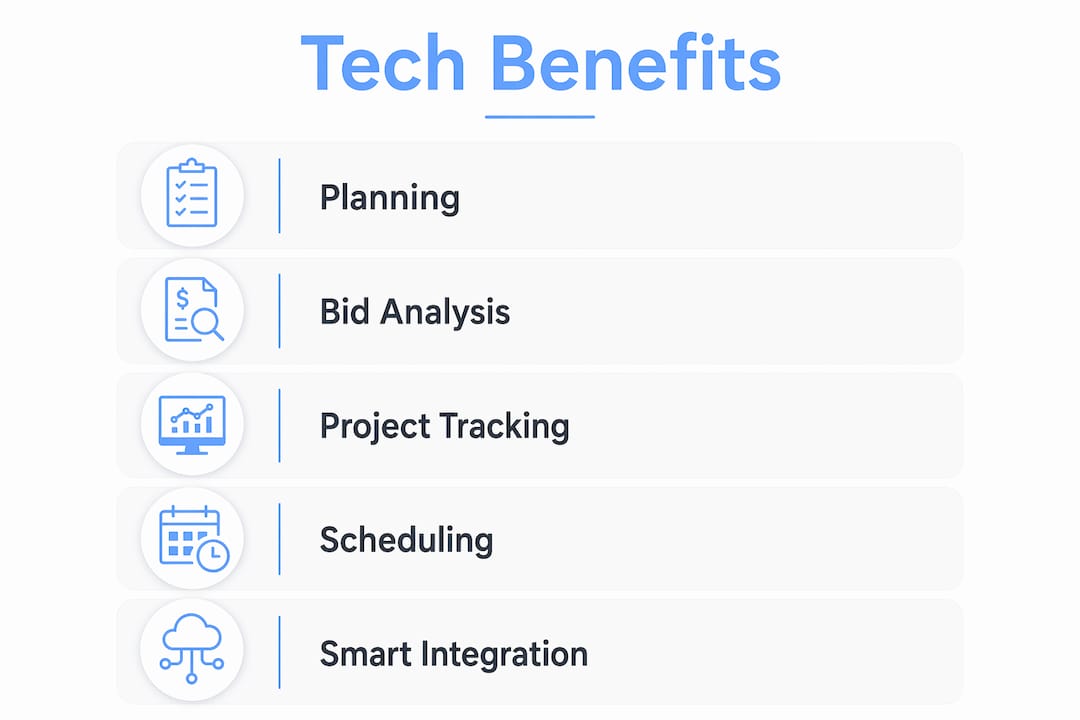
Digital tools for renovations now cover every phase of a project, from the first sketch to the final walkthrough. Three categories stand out for their practical impact: AI planning tools, reality capture technologies, and smart home systems.

AI as a planning and bid analysis tool
AI is most effective at the tasks that cost homeowners the most when done poorly: scope definition, bid comparison, and specification review. AI excels at pre-construction tasks like detecting vague scope items in contractor proposals and validating that specifications are complete before work begins. A vague scope is the single most common cause of costly change orders. Catching it before signing a contract saves thousands of dollars.
AI also generates cost estimates and project layouts faster than any manual process. AI-powered design tools speed cost forecasting and help homeowners visualize a finished space before a single wall comes down. That visualization step alone reduces mid-project design changes, which are expensive and disruptive.
Reality capture: 3D scanning and drones
Reality capture is the industry term for technologies that create precise digital records of physical spaces. 3D scanning and drones reduce manual measuring and improve planning speed and accuracy. A drone survey of a roofline takes minutes. The same job done manually takes hours and introduces human error. For complex renovations involving structural changes, accurate measurements from the start prevent costly corrections later.
These tools also let contractors and homeowners work from the same data. When everyone references the same 3D model, miscommunication drops sharply.
Smart home systems as renovation infrastructure
Smart home renovations now include lighting control, climate automation, security systems, and motorized window treatments as standard considerations, not luxury add-ons. Integrating smart shades during a renovation costs a fraction of what retrofitting them later requires. The same logic applies to HVAC automation, which works best when planned alongside ductwork and electrical upgrades rather than bolted on afterward.
- Lighting control: Smart switches and dimmers installed during renovation eliminate the need for rewiring later.
- Climate control: Programmable thermostats and zoned HVAC systems reduce energy costs and improve comfort.
- Security: Camera wiring and smart lock infrastructure are far cheaper to install during open-wall phases.
- Motorized blinds: Require low-voltage wiring that is simple to run before drywall goes up.
Pro Tip: Ask your electrician to rough in conduit runs for future smart devices even if you are not installing them yet. The conduit costs almost nothing during renovation and saves a major disruption later.
How does technology improve renovation planning and execution?
Technology in home improvement changes the planning process in three concrete ways: it reduces bid errors, centralizes communication, and keeps timelines on track.
Smarter bid evaluation with AI
Comparing contractor bids is one of the most stressful parts of any renovation. Most homeowners lack the experience to spot a low bid that will balloon with change orders versus a fair bid that covers the full scope. AI tools solve this by analyzing bid documents for missing line items, inconsistent pricing, and vague language.
- Upload all bids to an AI tool. Ask it to compare scope line by line and flag items that appear in one bid but not another.
- Identify vague scope language. Phrases like “allowance for materials” or “as needed” are red flags. AI catches these consistently.
- Validate specifications. Confirm that each bid references the same materials, finishes, and square footage. Differences here explain most price gaps.
- Request clarification before signing. Use the AI analysis to write specific questions for each contractor. This step alone prevents most change orders.
AI is highly effective at analyzing bids and identifying potential red flags that lead to costly change orders. Homeowners who use this process report fewer surprises and stronger contractor relationships because expectations are clear from day one.
Digital project management apps
A renovation without centralized communication is a renovation headed for delays. AI-enhanced project apps facilitate centralized communication and progress tracking, reducing the time homeowners spend chasing updates by phone or email. Every decision, photo, and schedule change lives in one place. That record also protects homeowners if a dispute arises.
The best project management approach for homeowners combines a shared document library, a daily log from the contractor, and a single messaging thread. This structure keeps everyone accountable without requiring the homeowner to be on-site every day.
Pro Tip: Set a weekly check-in with your contractor inside your project app. A five-minute video call logged in the platform creates a paper trail and catches small problems before they become expensive ones.
Automated scheduling and timeline management
Automated scheduling tools flag conflicts before they happen. If a tile delivery is delayed, the tool reschedules the tile installer automatically and alerts the general contractor. Manual scheduling misses these dependencies constantly. The result is idle crews, wasted days, and labor costs that add up fast.
Technology also improves decision speed. When a homeowner can approve a material substitution through an app in minutes rather than waiting for a phone call, the project keeps moving. Speed of decision is one of the most underrated factors in keeping a renovation on budget.
Why planning smart home integration early saves money
Smart home technology is not an afterthought gadget layer. It is a core structural component that belongs in the renovation plan from the first design meeting. The cost difference between early integration and later retrofitting is significant.
Adding smart home wiring during open-wall renovations adds 20–30% to electrical labor costs. Retrofitting the same wiring after walls are closed costs two to three times more due to the disruptive work required. For a 2,000 square foot home, delayed smart wiring can add $8,000–$15,000 to the total project cost. That is money spent on labor to open walls, run wire, and patch everything back together.
| Smart system | Cost during renovation | Estimated retrofit cost | Primary savings driver |
|---|---|---|---|
| Cat6 Ethernet wiring | Low | High | Avoids wall demolition |
| Smart lighting switches | Low | Moderate | Neutral wire already present |
| Security camera conduit | Very low | High | Eliminates fishing wire through finished walls |
| HVAC zone controls | Moderate | High | Integrates with existing ductwork |
| Motorized blind wiring | Very low | Moderate | Low-voltage runs before drywall |
The most valuable investments focus on infrastructure rather than devices. Roughing in Cat6 Ethernet and conduit during renovation is far less invasive and far more cost-effective than any post-renovation retrofit. Devices can be added later. Wire cannot be added without tearing into finished walls.
Common mistakes homeowners make by delaying these decisions:
- Assuming smart devices can always be added wirelessly (many require hardwired connections for reliability)
- Not sizing the electrical panel for future smart loads during a panel upgrade
- Skipping network planning until after the renovation, then discovering Wi-Fi dead zones in newly finished rooms
- Choosing smart bulbs over smart switches, which requires the bulb to always have power to function
What are the best practices for adopting technology in your renovation?
The impact of technology on remodeling is only as good as the decisions made before the first tool is picked up. These practices separate homeowners who benefit from technology from those who get burned by it.
Focus on high-impact, low-maintenance solutions
Over-specifying automation leads to a maintenance burden. A home filled with dozens of smart bulbs, each requiring its own app and a constant power supply, creates frustration rather than convenience. Smart switches are the better choice. They work with any standard bulb, integrate with major platforms, and do not require replacing when a bulb burns out.
- Prioritize smart switches over smart bulbs for lighting control.
- Choose thermostats that work with your existing HVAC system before buying a new system.
- Install a single smart hub rather than multiple brand-specific controllers.
- Limit voice assistant integration to rooms where hands-free control genuinely adds value.
Coordinate technology planning with your full project team
Technology decisions affect electrical, structural, and finish work. A home project planning checklist that includes smart home infrastructure prevents the common mistake of making tech decisions after the electrician has already finished rough-in work. Bring your technology plan to the first design meeting, not the last one.
Your electrician needs to know about smart switches before running wire. Your network installer needs to know about Cat6 runs before drywall. Your HVAC contractor needs to know about zone controls before installing equipment. These conversations cost nothing. Changing finished work costs a great deal.
Use AI as a complement to professional oversight
Technology complements human experience. AI tools allow remodelers to focus on craftsmanship and creativity by handling administrative and analytical tasks. The same principle applies to homeowners. AI handles bid analysis, schedule tracking, and specification review. Your contractor handles the physical work. Neither replaces the other.
Pro Tip: Use AI to generate a list of questions for your contractor before each project phase. This keeps conversations focused and ensures nothing gets missed before walls close or concrete pours.
The homeowners who get the most from technology in home upgrades treat digital tools as a preparation layer. They use apps and AI before and between site visits, then rely on their contractor’s expertise during construction. That division of labor produces better results than either approach alone.
Key takeaways
Technology reduces renovation costs, improves planning accuracy, and delivers better outcomes when integrated early and used alongside professional expertise.
| Point | Details |
|---|---|
| AI adoption is accelerating | Nearly 25% of homeowners used AI in renovation planning in 2026, up from 9% the year before. |
| Early smart wiring saves money | Installing smart infrastructure during open walls costs two to three times less than retrofitting later. |
| AI is best for pre-construction tasks | Use AI for bid analysis and scope review, not for managing physical construction work. |
| Smart switches beat smart bulbs | Smart switches are more reliable, easier to maintain, and work with any standard bulb. |
| Centralized communication prevents delays | A single project app with daily logs and shared documents keeps renovations on schedule and on budget. |
What I have learned from watching homeowners get technology right and wrong
The homeowners who benefit most from technology in renovations share one habit: they make technology decisions before the project starts, not during it. The ones who struggle do the opposite. They pick a contractor, approve a scope, and then ask about smart home options after the walls are already framed. At that point, every technology decision costs more than it should.
The other pattern I have seen repeatedly is the trap of over-automation. A homeowner installs 40 smart bulbs, three different smart home platforms, and a voice assistant in every room. Six months later, half the devices are disconnected because the apps stopped working together. The renovation looked impressive on paper. The daily experience was a headache.
The practical lesson is to choose fewer, better solutions. A smart switch panel, a solid Cat6 network, and a reliable thermostat will serve a homeowner for a decade. A collection of trendy gadgets will create a support ticket backlog. Technology in home renovations works best when it is invisible. When the lights adjust automatically, the temperature is always right, and the security system arms itself, nobody thinks about the technology. They just enjoy the home.
I also think the AI conversation is still misunderstood by most homeowners. AI does not replace your contractor. It makes you a better client. When you walk into a contractor meeting with a detailed scope comparison and a list of specific questions generated by an AI review of the bids, the conversation is completely different. You catch problems early. You build credibility. You get better work for the same price. That is the real value of AI in renovation planning, and most homeowners are not using it yet.
— Devin
How Bidwolf connects you with the right contractors for tech-driven renovations
Bidwolf is built for homeowners who want a smarter way to manage renovation projects. The platform lets you post your renovation project and receive competitive bids from vetted local contractors, all in one place. Built-in messaging keeps every conversation on record, and the mobile app lets you track progress from anywhere.
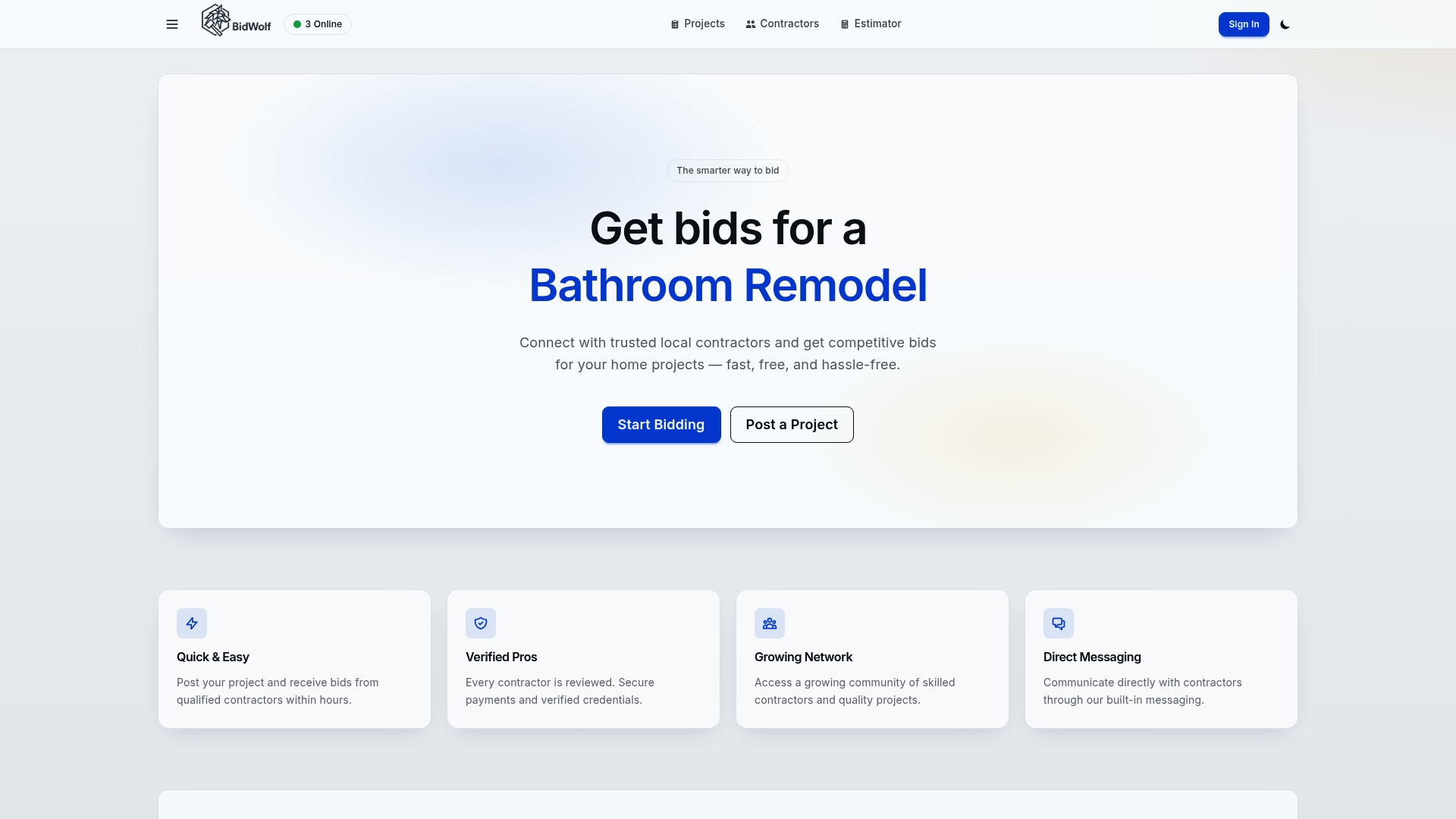
When you are ready to move from planning to execution, Bidwolf gives you the tools to compare bids clearly, communicate directly, and hire with confidence. You can also find local contractors by specialty and location, so you connect with professionals who have real experience with the type of renovation you are planning. No phone tag, no guesswork, and no surprises.
FAQ
What is the role of technology in home renovations?
Technology in home renovations covers AI planning tools, 3D scanning, digital project management apps, and smart home infrastructure. These tools reduce costs, improve accuracy, and help homeowners make better decisions before and during construction.
How much does smart home integration cost during a renovation?
Smart home integration costs range from $1,500–$3,500 for a single-room setup to $15,000–$30,000 for a whole-home system. Planning during the renovation rather than retrofitting later saves two to three times the labor cost.
Can AI really help with home renovation planning?
Yes. AI is most effective at analyzing bids, detecting vague scope language, and validating specifications before contracts are signed. It does not manage physical construction but significantly reduces pre-construction errors.
What smart home features should I prioritize during a renovation?
Start with infrastructure: Cat6 Ethernet wiring, conduit runs, neutral wires for smart switches, and proper panel sizing. These elements cost little during open-wall phases and prevent expensive retrofits later.
How do digital project management apps help homeowners?
Project apps centralize communication, store documents, and track progress in one place. They reduce delays caused by missed messages and create a clear record of every decision made during the renovation.