

Types of Home Improvement Leads: 2026 Homeowner Guide
TL;DR:
- Home improvement leads connect homeowners with contractors for renovation projects, but their quality varies by type. Exclusive, real-time leads are most effective for high-value projects, while shared, aged, or commercial leads suit smaller or long-term work. Verifying lead authenticity and providing detailed project information improve chances of receiving competitive, reliable bids.
Home improvement leads are defined as homeowner inquiries that connect local contractors with clients ready to hire for renovation, repair, or remodeling work. Not all leads are equal. The types of home improvement leads you encounter vary by exclusivity, timing, market segment, and source, and each category carries a different cost, conversion rate, and urgency level. Understanding these differences helps you find the right contractor faster, avoid wasted time, and get competitive bids on your project. Platforms like Bidwolf are built around this principle, matching homeowners with verified local professionals through a transparent bidding process.
1. What are the types of home improvement leads?
Home improvement leads fall into several distinct categories. Industry professionals organize them by exclusivity (exclusive vs. shared), timing (real-time vs. aged), and market segment (residential vs. commercial). Each category shapes how quickly a contractor responds, how much competition exists, and how likely your project is to move forward quickly. Knowing which lead type applies to your situation puts you in a stronger position when evaluating contractors.

2. Exclusive vs. shared leads: what the difference costs you
Exclusivity is the single most important variable in contractor lead generation. An exclusive lead goes to one contractor only. A shared lead gets sold to multiple contractors at the same time, triggering a race to contact you first.
Exclusive leads convert at a rate of 12–40%, compared to just 4–10% for shared leads. That gap exists because the contractor reaching you has no competition and can focus on winning your project rather than rushing to beat three other callers.
The cost difference reflects that quality gap. Shared leads typically cost contractors $20–$85 per lead. Exclusive leads run $90–$400 or more. Contractors paying more for exclusivity often pass that confidence on to you through more thorough estimates and better follow-through.
| Lead type | Typical contractor cost | Conversion rate | Best for |
|---|---|---|---|
| Shared | $20–$85 | 4–10% | High-volume trades, small repairs |
| Exclusive | $90–$400+ | 12–40% | High-ticket remodels, complex projects |
Pro Tip: If you post a project on a shared marketplace, respond to contractor calls quickly. The contractors most motivated to win your job call within minutes. Slow responses filter out the most competitive bids.
3. Real-time vs. aged leads: timing changes everything
The timing of a lead determines how ready a homeowner is to hire. Real-time leads arrive the moment a homeowner submits a project request. Aged leads are recycled contacts that can be days, weeks, or even months old.
Aged leads can be up to 180 days old, meaning the homeowner may have already hired someone, changed their mind, or forgotten they submitted a request. Contractors working aged leads need a patient, nurturing approach rather than an immediate close.
Real-time leads suit emergency situations best. A burst pipe or a roof leak after a storm requires instant contractor contact. Emergency home improvement leads have very fast sales cycles because the homeowner has no time to compare bids carefully. Remodeling leads, by contrast, allow for longer evaluation periods and multiple quotes.
| Lead age | Homeowner readiness | Best contractor approach |
|---|---|---|
| Real-time (0–24 hours) | High, active intent | Immediate call, same-day estimate |
| Recent (1–7 days) | Moderate, still comparing | Follow up within 24 hours |
| Aged (8–90 days) | Low to moderate | Email nurture, soft follow-up |
| Stale (90–180 days) | Low, may have hired | Re-engagement only |
Pro Tip: For real-time shared leads, responding within 5 minutes dramatically improves your chance of booking. Even exclusive leads benefit from contact under one hour.
4. Residential vs. commercial leads: key distinctions
Residential and commercial home improvement leads target completely different buyers, decision processes, and project scales. Mixing them up wastes time for both homeowners and contractors.
Residential leads cover single-family homes, condos, and rental properties. Examples include bathroom remodels, roof replacements, HVAC installations, and kitchen renovations. The decision-maker is typically the homeowner or landlord, and the sales cycle is short. A homeowner can approve a quote and sign a contract the same day.
Commercial leads involve office buildings, retail spaces, multi-unit properties, and industrial facilities. These projects require approval from property managers, business owners, or boards. The sales cycle is longer and involves multiple review stages before a contractor gets the green light.
Key distinctions between residential and commercial leads:
- Decision speed: Residential homeowners decide in days. Commercial clients often take weeks or months.
- Project scale: Commercial projects carry larger budgets but require licensed, bonded contractors with proven commercial experience.
- Lead sources: Residential leads come from Google searches, neighborhood apps, and home improvement marketplaces. Commercial leads often come from industry referrals, property management networks, and direct outreach.
- Contractor fit: A contractor specializing in residential kitchen remodels is not the right match for a commercial tenant buildout. Lead type and contractor specialty must align.
- Real estate investors: Investors managing rental portfolios often generate leads that sit between residential and commercial. They need contractors who can handle volume and work across multiple properties efficiently.
5. Top lead generation sources and the lead types they produce
Every home renovation lead source generates a different quality and type of lead. Knowing the source tells you a lot about the homeowner’s intent and the contractor’s likely response quality.
Google Local Service Ads (LSAs) produce the highest-intent residential leads available. Homeowners searching for a specific contractor type are actively ready to hire. LSA leads cost contractors $20–$80 per lead on average. These are real-time, high-intent contacts with strong conversion potential.
Pay-per-click (PPC) ads on Google or Meta generate leads at $30–$200 or more per lead. PPC leads vary in intent because some homeowners click ads while browsing rather than actively hiring. Conversion rates depend heavily on landing page quality and follow-up speed.
Organic SEO delivers leads at near-zero marginal cost after a 6–12 month ramp-up period. These leads arrive from homeowners who found a contractor through search results, meaning they already trust the source. SEO leads tend to be exclusive by nature because the homeowner contacts one contractor directly.
Online marketplaces and bidding platforms like Bidwolf generate shared or exclusive leads depending on the platform model. Homeowners post projects, and contractors bid competitively. This model gives homeowners multiple quotes quickly and lets contractors target specific project types in their local area.
Referrals remain the highest-quality lead source overall. A referred homeowner arrives with built-in trust and a shorter sales cycle. Referral leads cost contractors almost nothing to generate, which protects their margins.
Pro Tip: Diversifying lead sources across paid search, marketplaces, and referrals protects against pipeline gaps. Contractors relying solely on paid leads face margin compression of 20–25% compared to those who build owned channels alongside paid ones.
6. Choosing the right lead type for your project or investment goal
The right lead type depends on your project scope, timeline, and how quickly you need a contractor. Not every homeowner needs the same approach.
For high-value remodels, such as a full kitchen renovation or a whole-home addition, exclusive leads produce better outcomes. The contractor who wins an exclusive lead has time to prepare a thorough estimate and build a relationship before the project starts. The higher cost to the contractor is justified by the project value, and you benefit from more focused attention.
For small repairs, shared leads work well. A plumbing fix, a fence repair, or a minor electrical job does not require an elaborate vetting process. Multiple contractors competing for the work drives prices down and speeds up response times.
Real estate investors managing multiple properties benefit most from contractors who work with lead generation strategies built for volume. Contractors using SEO and referral networks alongside paid leads tend to have more stable pipelines and better pricing consistency across repeat projects.
| Lead type | Best project fit | Homeowner priority |
|---|---|---|
| Exclusive, real-time | High-ticket remodel, complex renovation | Quality and attention |
| Shared, real-time | Small repair, urgent fix | Speed and price |
| Exclusive, aged | Long-term planning, investment property | Relationship building |
| Shared, aged | Budget projects, flexible timeline | Cost savings |
Understanding contractor lead types helps you set realistic expectations about response times, bid quality, and project timelines before you even post your first project.
7. How lead intent shapes contractor quality
Lead intent describes how ready a homeowner is to hire at the moment they submit a request. Intent is the hidden variable that separates a productive lead from a wasted one.
“Dreaming” leads come from homeowners who are researching ideas but have no firm timeline. These contacts have long sales cycles and require patient follow-up from contractors. Pushing for a fast close on a dreaming lead damages the relationship and wastes both parties’ time.
“Active” leads come from homeowners with a defined project, a budget, and a timeline. Matching contractor outreach to lead intent is critical for conversion and for building a reputation as a professional who listens rather than pressures.
Emergency leads sit at the opposite end of the spectrum. A homeowner with a flooded basement or a broken furnace in winter needs a contractor within hours, not days. Contractors who specialize in emergency response build their entire lead strategy around real-time, exclusive contacts.
As a homeowner or investor, you can signal your intent clearly by providing project details, a budget range, and a start date when you post a project. Clear intent attracts better-prepared contractors and filters out those who are not the right fit.
8. Lead verification and what it means for your project
Lead verification is the process of confirming that a homeowner inquiry is genuine before a contractor pays for it or responds. Verified leads reduce wasted time and protect both parties.
Verified leads typically include a confirmed phone number, a real project description, and a geographic match to the contractor’s service area. Platforms that verify leads before distributing them produce higher conversion rates because contractors know the contact is real and the project is active.
Contractor team size affects which verification level makes sense. Solo contractors favor flexible pay-per-lead models where they can control volume. Growing teams invest in verified, exclusive leads with phone confirmation. Large teams combine verified databases with outbound outreach and SEO.
For homeowners, posting on a platform that verifies contractor credentials works the same way in reverse. You want to know the contractor bidding on your project holds the right licenses, carries insurance, and has a track record in your area. Bidwolf verifies contractor credentials before they can bid, which removes the guesswork from the selection process.
Key Takeaways
The most effective home improvement lead strategy combines exclusive, high-intent, real-time contacts for major projects with shared or aged leads for smaller, flexible work.
| Point | Details |
|---|---|
| Exclusivity drives conversion | Exclusive leads convert at 12–40%, far above the 4–10% rate for shared leads. |
| Timing determines readiness | Real-time leads signal active intent; aged leads up to 180 days old require nurturing. |
| Segment shapes sales cycle | Residential leads close in days; commercial leads involve multi-stage approvals. |
| Source signals intent | Google LSA and referrals produce the highest-intent leads at predictable costs. |
| Verification protects both sides | Verified leads and verified contractors reduce wasted time and improve project outcomes. |
What I’ve learned about home improvement leads after years of watching the market
The lead market in home improvement is messier than most homeowners realize. Contractors are often buying the same contact you submitted to three different platforms simultaneously, and they are all racing to call you within minutes. That is not a system designed around your experience as a homeowner. It is designed around volume.
What actually works for high-value projects is a different model entirely. Exclusive, verified leads connected to a specific project description produce better contractor behavior. When a contractor knows they are the only one bidding, they invest time in a real estimate rather than a rushed phone pitch. I have seen this pattern repeat consistently: the quality of the contractor’s first contact reflects the quality of the lead they received.
The mistake I see homeowners make most often is posting a vague project description and then wondering why the bids they receive are all over the place. Vague input produces vague output. A detailed project post with a clear scope, a realistic budget range, and a firm start date attracts contractors who are serious and prepared.
For real estate investors, the calculus is slightly different. You need contractors who can handle repeat work, move quickly between properties, and price consistently. That means building relationships with contractors who have stable lead pipelines of their own, not ones who are scrambling to fill their calendar week to week. Look for contractors who invest in owned lead channels like referrals and SEO alongside paid platforms. Those contractors tend to be less desperate and more reliable.
The lead market in 2026 rewards specificity on both sides. Homeowners who post detailed projects and investors who communicate volume expectations get better results than those who treat every platform like a generic search engine.
— Devin
Bidwolf connects you with verified local contractors
Posting your home improvement project on Bidwolf puts your request in front of verified, license-checked contractors who are actively looking for work in your area. You describe the project once, and qualified professionals submit competitive bids directly to you.
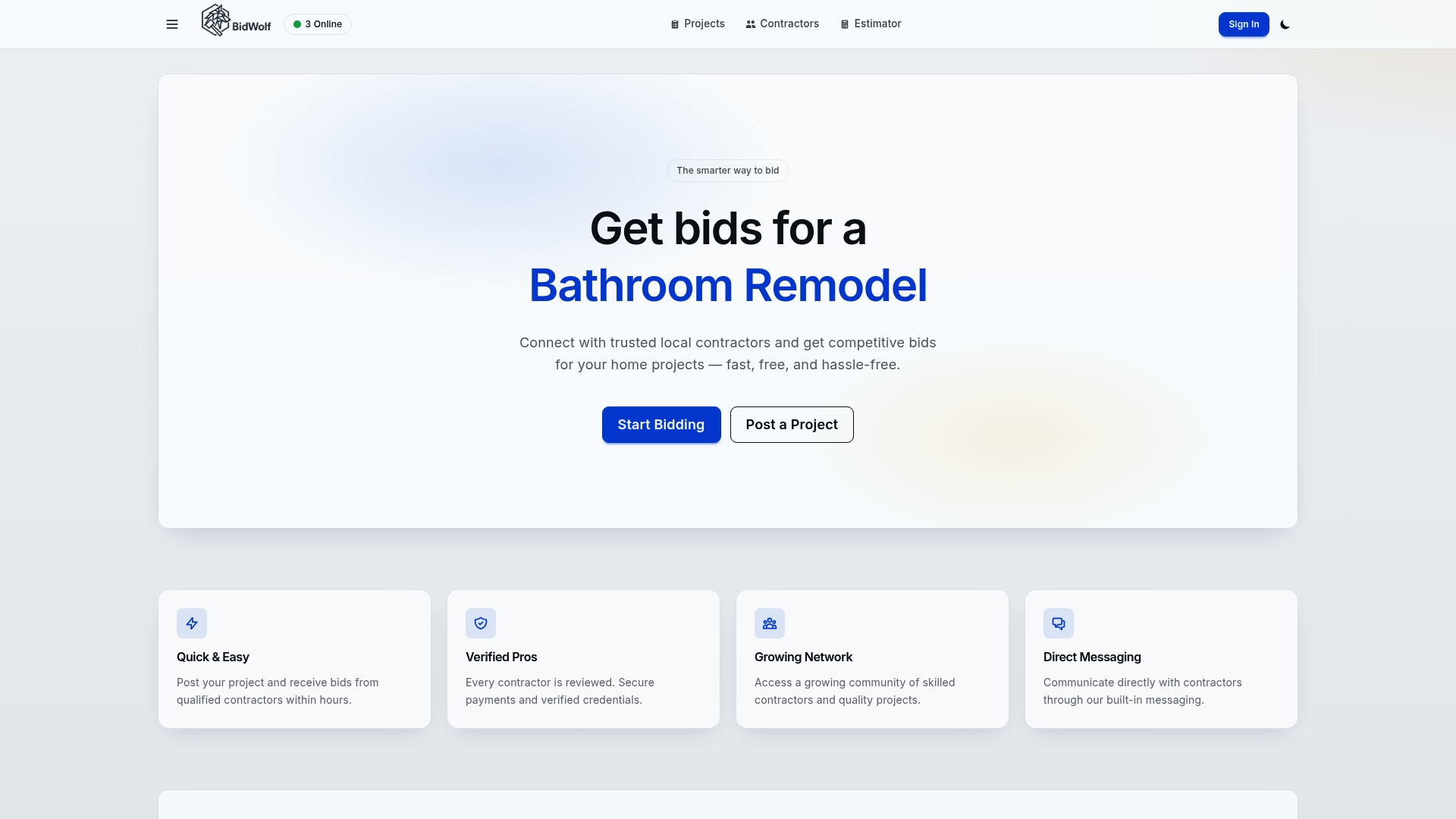
Bidwolf’s platform is built around transparency. You see contractor credentials, read reviews, and compare bids side by side without making a single cold call. The built-in messaging system lets you ask questions and clarify scope before committing. Whether you are planning a bathroom remodel, a roofing replacement, or a full renovation, post your project on Bidwolf and receive bids from trusted local pros. You can also browse verified contractors by trade and location to find the right match for your timeline and budget.
FAQ
What is the difference between exclusive and shared home improvement leads?
Exclusive leads go to one contractor only, while shared leads are sold to multiple contractors at the same time. Exclusive leads convert at 12–40% compared to 4–10% for shared leads, making them more effective for high-value projects.
How quickly should a contractor respond to a home improvement lead?
Contractors should respond to shared leads within 5 minutes and exclusive leads within one hour. Slow response times cause leads to go cold quickly, especially in shared marketplaces where multiple contractors compete for the same contact.
What are the best sources for home improvement leads?
Google Local Service Ads, organic SEO, referrals, and verified bidding platforms like Bidwolf produce the highest-intent leads. Google LSA leads cost $20–$80 per lead and come from homeowners actively searching for contractors.
Are aged home improvement leads worth pursuing?
Aged leads can be useful for budget-conscious contractors willing to invest in follow-up, but leads older than 90 days carry significant risk. Aged leads up to 180 days old may have already hired another contractor or abandoned the project entirely.
How do I attract better contractor bids on my home improvement project?
Post a detailed project description with a clear scope, a realistic budget range, and a firm start date. Specific project posts attract prepared contractors and filter out those who are not a good fit for your timeline or budget.